

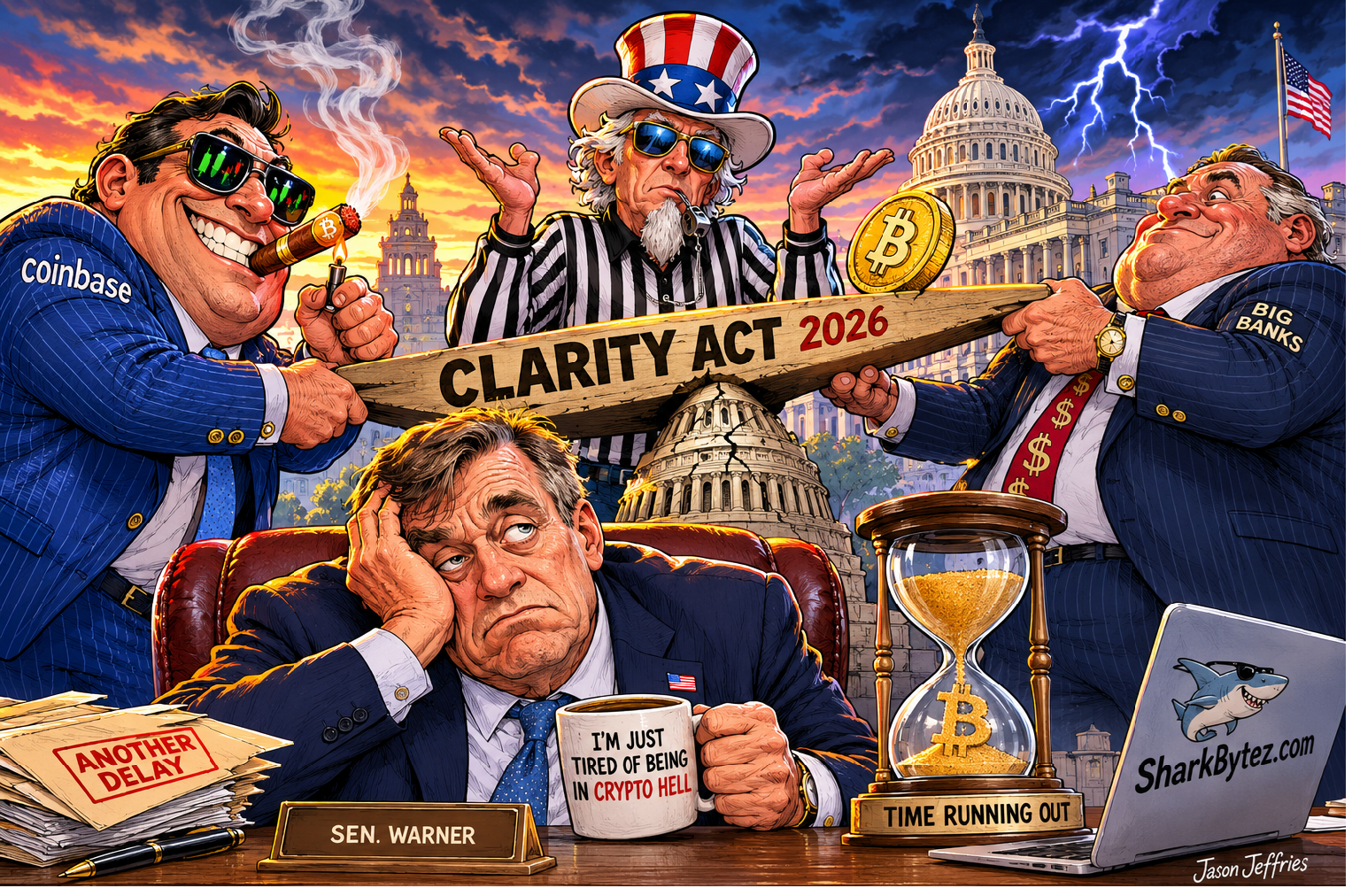
Washington in July is a humid, rotting pressure cooker, but inside the halls of the United States Senate, the suffocating heat is entirely self-inflicted. Lawmakers find themselves locked in a frantic, beautifully air-conditioned dance over the CLARITY Act—a sprawling, hyper-delusional piece of 2026 legislation designed to finally draw a clean line between digital commodities and securities. Everyone inside the Beltway begrudgingly agrees that the current regulatory rules are broken. Yet, watching Congress attempt to legislate digital assets is like watching a Victorian clockmaker try to repair a quantum computer using nothing but a rusted sledgehammer.The tragedy of the CLARITY Act isn't a lack of raw ambition; it is that the bill has devolved into an expensive, high-stakes battleground for political leverage. Earlier this year, Coinbase single-handedly derailed a crucial Senate Banking Committee vote with a brute-force lobbying blitz.
Fast-forward through months of tense, late-night backroom negotiations, and Senators Angela Alsobrooks and Ruben Gallego stepped up to provide the pivotal votes to nudge the bill out of committee. But let us be entirely clear about the absolute absurdity of this performance: a vote to keep talking is not a vote for final passage. It is simply a polite agreement to keep the theater lights on while the clock runs down.The legislative machinery is currently grinding to a halt over three ridiculous stumbling blocks. First, Democrats are staging a furious stand over ethics guardrails, refusing a floor vote without strict asset provisions governing elected officials. Second, the "Yield War" has turned into a bare-knuckle brawl as traditional banking lobbyists square off against crypto platforms over stablecoin interest payouts
Finally, while Senator Cynthia Lummis champions real-time exchange interdiction and rapid asset freezes, law enforcement groups are frantically sweating over developer liability protections.With the August recess looming, Senate Republicans are attempting to scramble together a desperate floor vote.
Senator Mark Warner summarized the collective, bone-deep exhaustion best, flatly noting that he is simply "tired of being in crypto hell." Rushing a half-baked, reconciled text to the White House without settling core compliance frameworks guarantees one outcome: another spectacular legislative stall. The digital asset ecosystem remains hopelessly stranded in regulatory purgatory, waiting for Capitol Hill to trade expensive political posturing for genuine, functional compromise.