


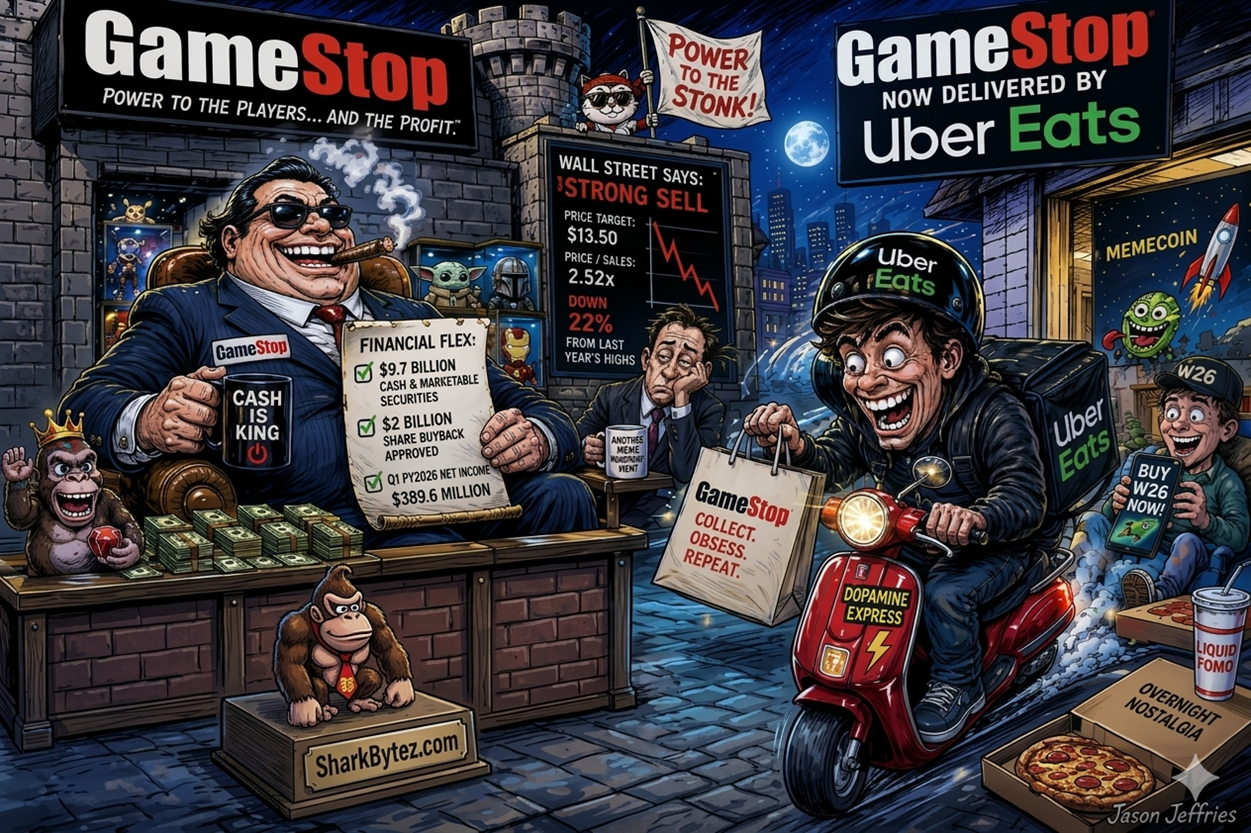
GameStop has partnered with Uber Eats. Yes, the eternal meme-stock warrior from its Grapevine, Texas stronghold is now gig-economy adjacent. The suits call it an “omnichannel strategy” — modernizing retail through impulse buys and launch-day frenzy. Wall Street answered with its usual weary shrug. The stock barely twitched, still trading at a lofty 2.52 times sales and lingering 22% below last year’s highs. Analysts cling to their “Strong Sell” ratings and $13.50 price targets like lifelines. Yet peer behind the skepticism at the financial theater. GameStop sits on a staggering $9.7 billion in cash and marketable securities. They just greenlit a $2 billion share buyback. Q1 fiscal 2026 net income exploded to $389.6 million.
The miracle? Not video games. Software and hardware sales cratered. Instead, collectibles roared to $348.9 million, turning the former tech retailer into a multi-billion-dollar nostalgia warehouse stuffed with plastic idols and hoarding fuel. The poetry is chef’s kiss: a company armed with nearly $10 billion in cash now dispatches gig workers to rush-deliver pop-culture totems alongside late-night burritos. The revolution didn’t dismantle the system. It simply weaponized convenience for midnight dopamine hits . This is peak absurdity — brick-and-mortar’s ghost using the gig economy to monetize our shortest attention spans. Enjoy the convenience. Marvel at the cash pile. Just remember the old retail world didn’t die; it rebranded as a very expensive toy chest with faster delivery. Stay sharp. Stay skeptical.