

Namecheap Blackout: Thursday The 13th
Not financial advice. For satirical purposes only.
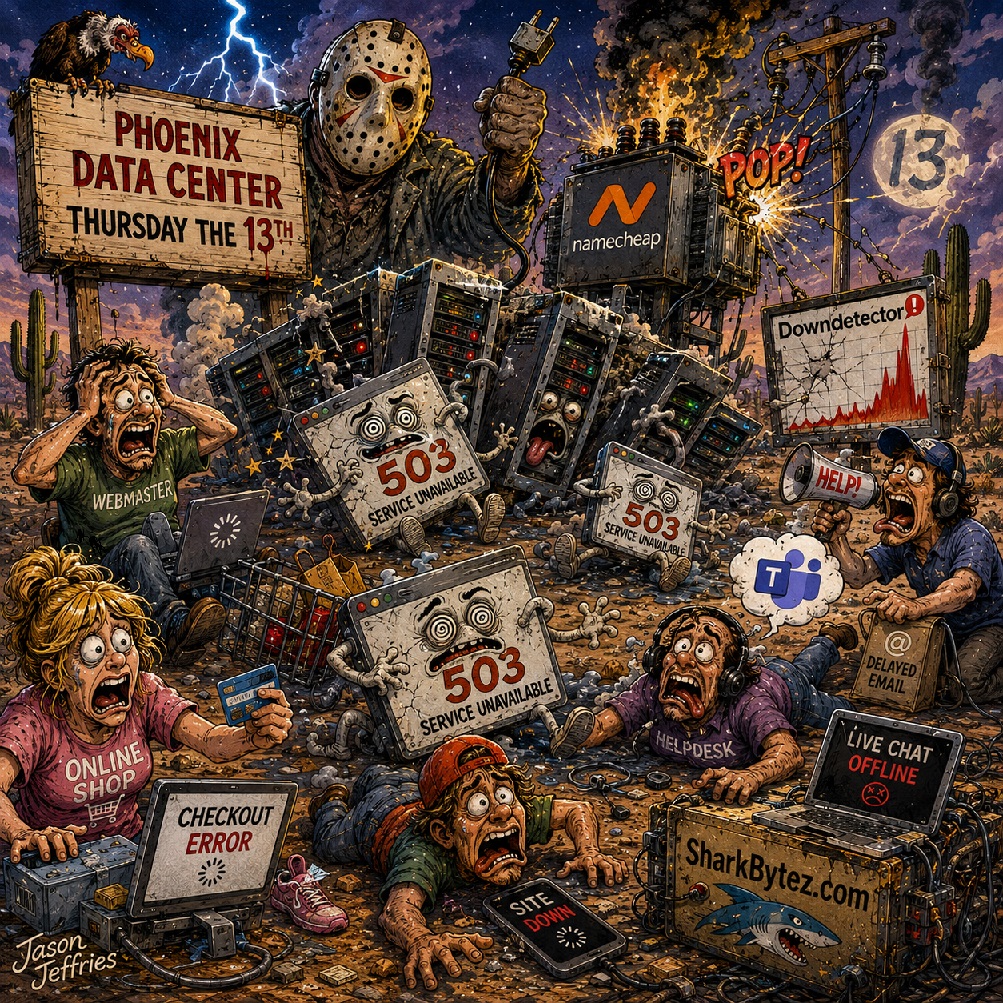
The modern internet struts around like the final girl who always makes it to the sequel—fiber-optic veins throbbing, splash pages polished to a mirror shine, automated storefronts swearing they can never die. It sells seamless connectivity and eternal uptime with the cocky grin of someone who has never heard the distant thunder of a cursed day rolling in. Then Thursday the 13th arrives in Phoenix, one power transformer lets out a pathetic wheeze, and the whole digital body face-plants so hard the 503 screens leave cartoon stars spinning above every browser tab like a camp counselor who just realized the lights are out.
Namecheap, the long-running domain landlord sitting on more than twenty-four million web addresses and nearly one-and-a-half million private inboxes, got body-slammed by the oldest, dumbest force in the franchise: electricity simply clocking out. No elite hacker. No ransomware plot twist. Just a mundane power failure at a desert data center that decided the universe needed a classic jump scare. Network graphs flatlined. Downdetector erupted like every light in a lakeside cabin shorting at once. Suddenly millions of webmasters, side-hustle grinders, and e-commerce operators stared at blank screens while their online empires performed the slowest, most embarrassing collapse in recent memory—servers toppling like drunk uncles at a family reunion, websites skidding across the digital floor on banana-peel error codes, entire storefronts doing the full pratfall with legs in the air.
Online shops froze mid-checkout like campers who just noticed the phone line is dead. Corporate emails vanished into the static with the grace of a waiter dropping an entire tray of plates in the mess hall. Support channels went silent. And in a moment of pure slapstick gold, Namecheap’s own helpdesk live chat keeled over right next to the primary servers, leaving frantic clients shouting into Microsoft Teams, delayed inboxes, and the digital equivalent of yelling down an empty hallway while the power outage slowly drags its feet across the floor. The company that sells digital immortality could not keep its own customer service tools from becoming the first casualty of the night, arms flailing in perfect comic timing. Absolute poetry.
This is the structural absurdity nobody wants to say out loud. Tech never stops preaching decentralization, multi-region redundancy, and AI smart enough to outrun any threat. Venture decks overflow with slick promises of unbreakable platforms that always survive until the next installment. Yet the entire house of cards still rests on a handful of industrial breakers in a sun-baked Phoenix warehouse that apparently runs on hope, outdated fuses, and pure bad luck. One tripped circuit and twenty-four million digital properties instantly turn into expensive digital paperweights doing the full cartoon collapse—legs buckling, eyes spinning, smoke gently rising from the metaphorical ears. We built a global economy on the glowing fantasy of frictionless forever, then handed the keys to a power transformer with the reliability of a rusty lawnmower left outside in August heat on the unluckiest date on the calendar.
For every domain hoarder, founder, and digital operator currently watching revenue bleed out in real time, the lesson is ugly and unavoidable. Silicon Valley sells the fantasy of invincible infrastructure that always lives to fight another day. Physical reality answers with a shrug and a blown fuse. Next time a mega-provider pitches revolutionary cloud resilience, remember Thursday the 13th in the desert. The future of global digital commerce is not being held back by complex code. It is hanging by a single industrial cable, praying the next power surge stays polite. The house of cards is still upright—for now. Just don’t breathe too hard near it.
Shark Cage - A SharkBytez Trusted Partner
Want to keep your connection to yourself while you trade? NordVPN is a fast, no-log VPN worth having.