

Google Pixel Tag vs. Apple AirTag
Not financial advice. For satirical purposes only.
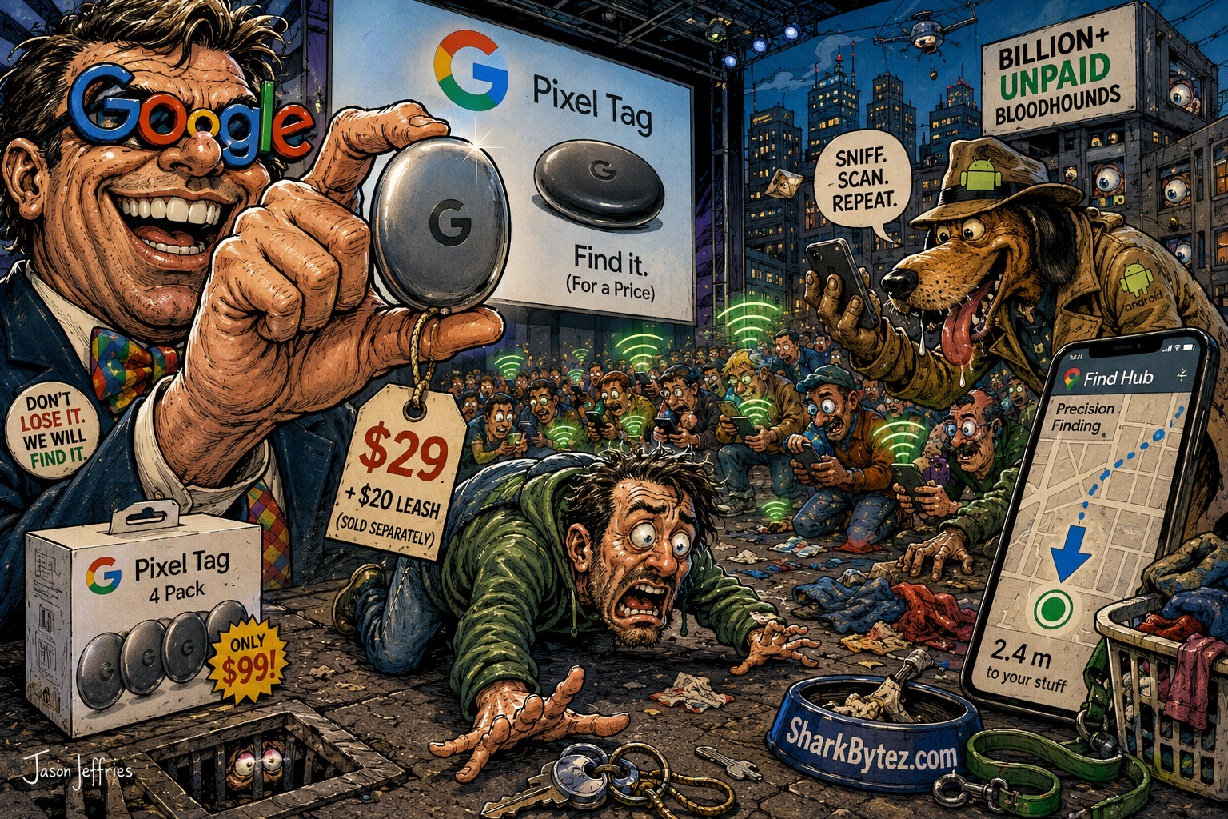
Google finally rolled its own plastic tracking pebble onto the stage at the Made by Google 2026 keynote, five full years after Apple taught the world how to turn lost keys into a corporate subscription. The $29 Google Pixel Tag arrived right next to the shiny Pixel 11, an oval slab of stainless-steel optimism powered by a CR2032 coin cell, a tiny speaker, Ultra-Wideband, and Bluetooth Channel Sounding. Google promises it will locate your luggage, wallet, or last shred of patience by piggybacking on more than a billion Android phones already wandering the planet. It is textbook late-stage copycatting: wait for a rival to invent the accessory category, watch the market thicken, then slap a G logo on the same battery-powered beacon and call it innovation.
The designers skipped Apple’s hockey-puck look and instead produced a slim, stretched pebble that resembles a polished river rock or an overpriced mint that somehow costs twenty-nine dollars. The shell is IP67 water-resistant, which is nice, yet the company somehow forgot a basic keyring hole. Want to attach this thing to actual keys without watching it vanish into a storm drain? Prepare to spend another twenty bucks on the official silicone leash. That is not an oversight. That is an ecosystem toll booth disguised as thoughtful industrial design.
The real comedy sits in the network. Google rebranded its tracking system as Find Hub and turned every Android handset on Earth into an unpaid digital bloodhound scanning sidewalks for your mislaid stuff. You can ring the tag from a Pixel Watch, share access with ten friends, or follow precision arrows straight to the bag buried under last week’s laundry. All of it rests on the cheerfully absurd premise that a giant advertising company should know the exact physical coordinates of your house keys while selling you $99 four-packs for the privilege.
Wall Street will clap for the high-margin accessory play and the recurring revenue potential. Consumers get genuine utility wrapped in the familiar blanket of corporate location data. Google did not invent the modern Bluetooth tracker. It simply waited, watched, then built a toll booth inside the operating system and invited everyone to pay the fare. The Pixel Tag ships in November. Three months remain for the public to decide whether another digital leash belongs in the pocket or whether the whole performance is just another expensive reminder that Big Tech’s favorite product is still the same idea, five years late, with a slightly different shape.
Shark Cage - A SharkBytez Trusted Partner
Are you interested in online trading? Try our trusted platform, Margex — up to 100x leverage on a fast, no-KYC exchange.