

Senate Crypto Bill Advances Amid Trump Family Profit Storm
Not financial advice. For satirical purposes only.
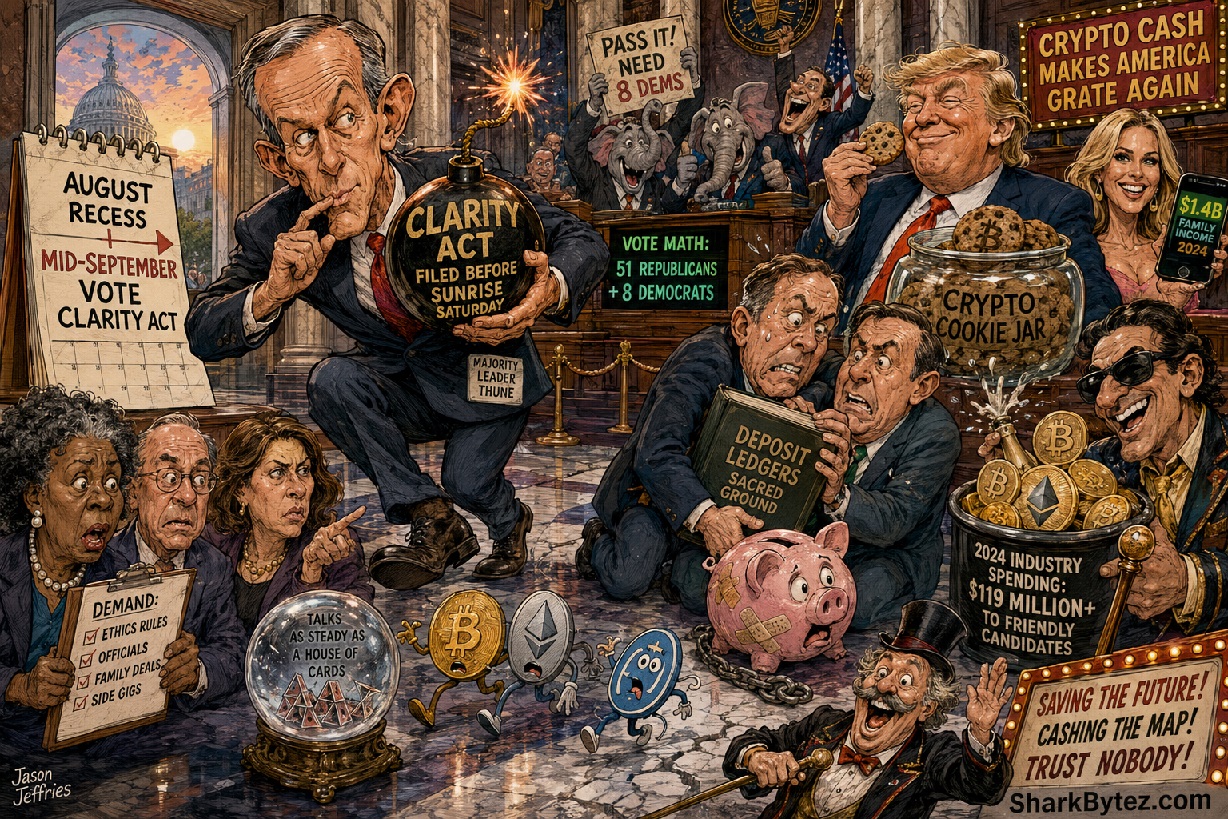
The United States Senate, that slow-motion parade of marble and mutual suspicion, just watched Majority Leader John Thune tiptoe in before sunrise on a Saturday and drop a procedural bomb on the calendar. He filed paperwork to force a key vote on the Clarity Act the second senators drag themselves back from August recess in mid-September. If it survives, crypto finally gets a real federal rulebook: neat little boxes declaring which digital tokens are securities, which are commodities, and which regulators get to chase them around the playground. Trump and the industry would high-five like kids who just found the cookie jar unlocked. Banks would clutch their deposit ledgers like someone just suggested sharing the family silver.
The vote math is pure slapstick. Every Republican plus at least eight Democrats. Thune’s pre-dawn filing suggests Republican leaders think they can still pry those eight free with enough arm-twisting and hopeful eye contact. Crypto companies insist the bill is pure oxygen, the legal clarity that might finally stop them from operating like a permanent science experiment in a fog machine. Banks see a different cartoon: crypto outfits dangling rewards on stablecoin holdings and waltzing off with the deposit business banks treat like sacred ancestral ground.
The industry already shoveled more than $119 million into friendly candidates in 2024, a number so large it makes ordinary campaign checks look like pocket lint. Trump, who spent the trail smiling at crypto cash and whose family ventures reported more than $1.4 billion in income last year, has treated the reform like a personal pet project. The White House keeps pushing. Democrats keep circling the same shiny object: tighter rules on government officials and relatives dipping into crypto side gigs. Those talks remain as steady as a house of cards in a wind tunnel.
September will bring the full circus of procedural votes, whispered deals, and lawmakers treating digital tokens like the next gold rush while simultaneously arguing over who gets to cash the map. The Clarity Act promises order. What it mostly delivers is another round of high-stakes political slapstick in which everyone claims to be saving the future and nobody trusts the scorekeeper. Pass or stall, the absurdity remains undefeated, still doing cartwheels across the marble floors.