


From Google Glass to $89 Walmart Specs: The New Face of Surveillance
Not financial advice. For satirical purposes only.
The world has decided that strapping a discreet camera to your face is the next logical step in human progress, and the market is answering with the enthusiasm of a clearance sale. Budget camera glasses now sell for a fraction of the Meta and Ray-Ban models that start around three hundred dollars. These cheaper versions run the same basic playbook: tiny cameras that quietly capture whatever the wearer looks at, microphones that soak up ambient sound, speakers for calls and podcasts. Footage parks itself on the device until it slides into a phone app for editing, sharing, and dumping online. Suddenly sidewalks everywhere are filled with people who look ordinary until you realize they might be documenting the entire scene in real time.
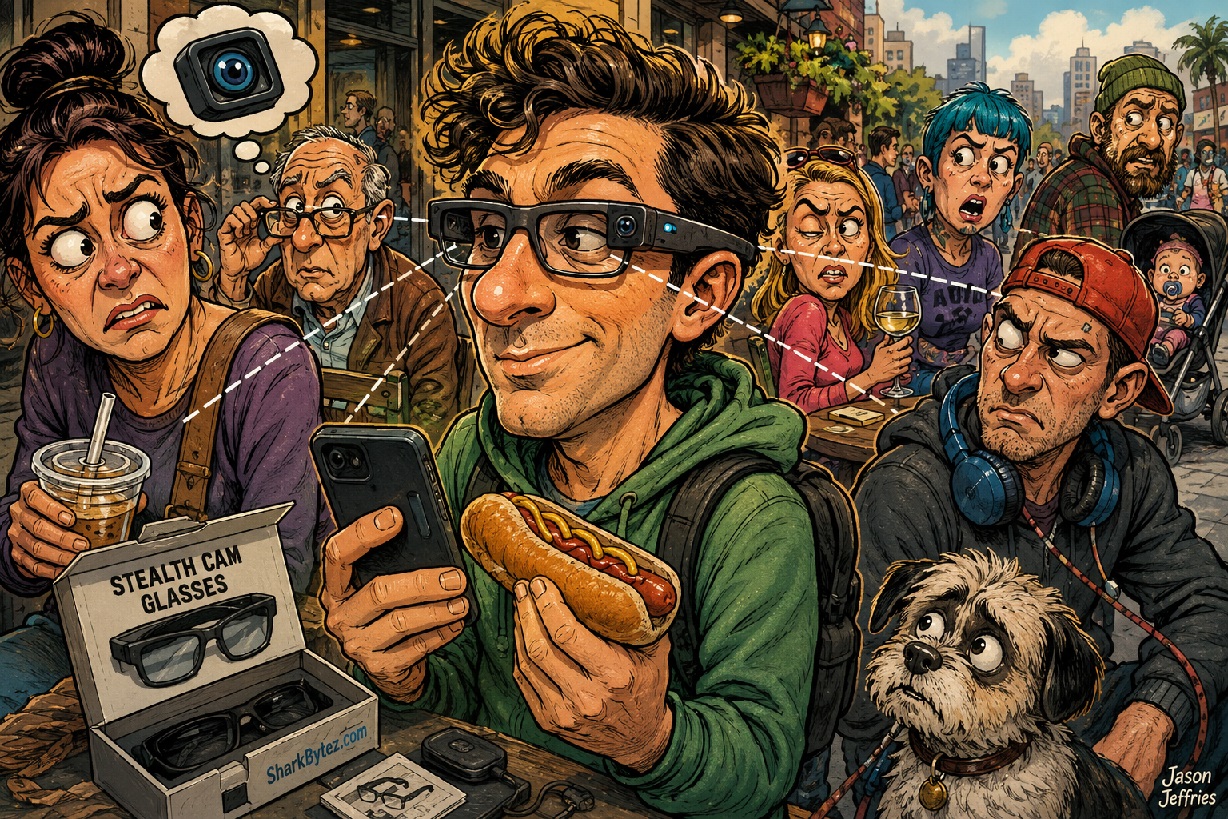
The visual comedy is relentless. Pedestrians perform the delicate head-swivel of someone trying to decide whether the stranger next to them is simply existing or quietly filming the way they walk. Old Google Glass users were easy targets—clunky frames, celebrity endorsements, and the unmistakable aura of someone who had volunteered to become a walking punchline. Modern versions are sleeker, quieter, and far better at disappearing into the background. That aesthetic upgrade turns every casual glance into a possible permanent record. What once announced itself with all the subtlety of a neon sign now blends in like mild self-importance.
Privacy regulators across countries are scrambling for urgent reviews, which is the bureaucratic equivalent of noticing the house is already rearranged after the furniture has been moved. Most privacy laws remain fragmented and slow, applying mainly to organizations rather than individual wearers. Recording private conversations without consent can still trigger legal trouble in many places. Serious invasions of privacy can lead to lawsuits. Anti-harassment and online safety rules exist for the ugliest fallout. The legal toolkit is real. It is also late, scattered, and still chasing hardware that already sits on store shelves.
Companies worry about confidential information walking out the door on an employee’s face. Ordinary people worry about becoming unsolicited content. People with disabilities may actually find the technology useful. Everyone else is left performing the daily mental calculation of whether the person across the table is simply listening or quietly archiving the conversation for later. The form the technology takes is a choice, not destiny. The world now gets to decide whether cheap camera glasses become another layer of ambient recording or something designed with actual limits from the start. For the moment the glasses keep selling out, the reviews keep spinning, and the streets keep filling with people who look perfectly normal until you realize they might be documenting every awkward moment in high definition.