

Crypto Graveyard 2026: 161 Dead Projects: Wall Street Takes Over Blockchain
Not financial advice. For satirical purposes only.
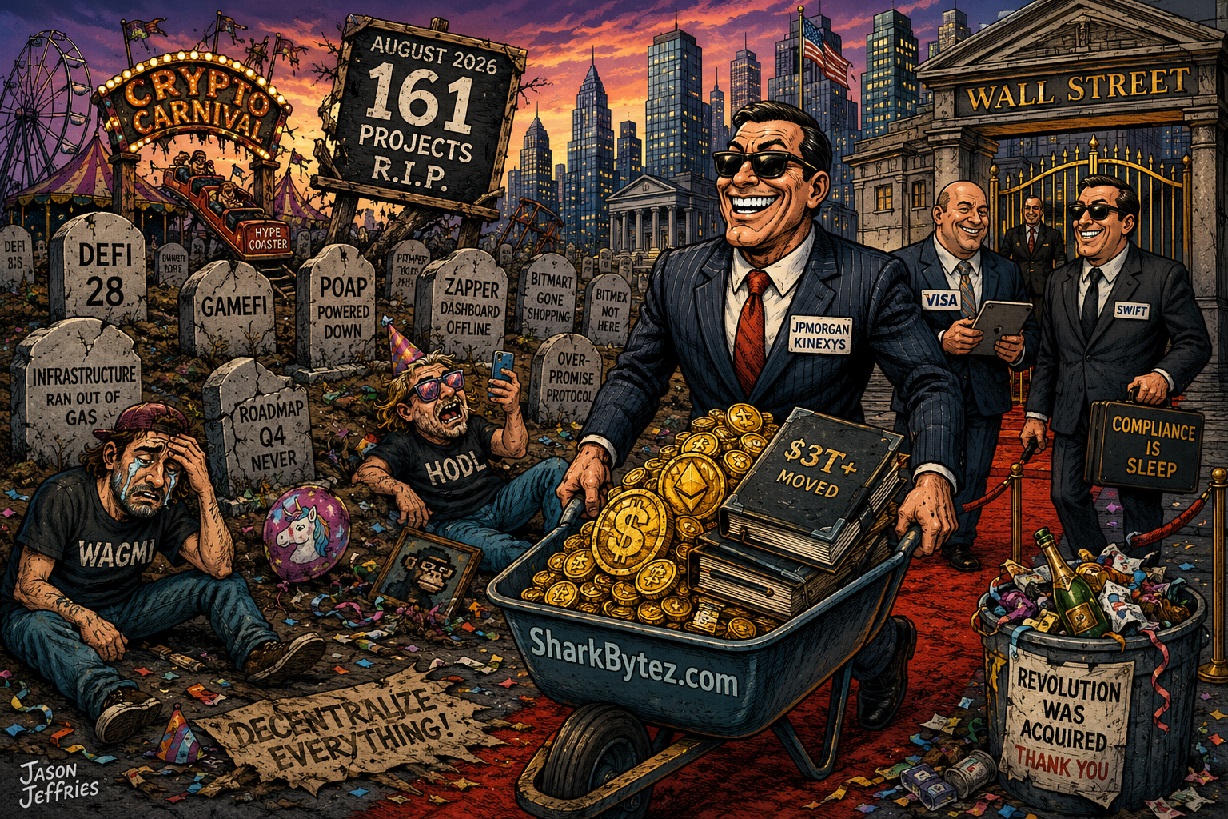
August 2026 and the crypto graveyard has stacked 161 headstones in neat little rows, a digital boneyard where half-baked dreams finally stop twitching. Decentralized finance leads the procession with 28 stiffs, followed by gaming projects that never quite spawned, infrastructure that collapsed under its own white papers, and the NFT crowd still waving their expensive JPEGs like expired carnival tickets. POAP cut the power when the community vibes stopped covering the electricity. Zapper’s dashboard went dark mid-refresh. BitMart and BitMEX slipped out the back like vendors who realized the cotton candy machine was empty and the crowd had already moved on.
The original pitch was pure sidewalk spectacle: torch the middlemen, scatter the suit-and-tie crowd, hand the whole carnival over to pure code and wide-eyed believers with open wallets. Retail poured in waving banners and depositing life savings. Then the easy-money tide rolled out and left a beach full of half-built rides, unpaid invoices, and founders practicing their “traditional finance experience” lines in cracked bathroom mirrors. The confetti is still stuck to everything. The only ones still smiling are the ones who never bought the ticket.
Now the very institutions the revolution was supposed to leave face-down in the dirt have arrived with polished shoes and corporate wheelbarrows. JPMorgan’s Kinexys platform has already shuffled more than three trillion dollars across institutional ledgers that never needed a Discord moderator or a midnight meme. Visa is settling stablecoins in the billions across public networks while looking completely unbothered, like a man who just bought the entire fairground. Swift and The Clearing House are installing regulated, always-on systems that only rest when the compliance team finishes its coffee. Blockchain did not collapse into a smoking crater. It simply put on a tailored jacket, passed every background check, clipped on a laminated badge, and started charging admission.
Early believers treated central intermediaries like something contagious that needed to be wiped clean off the map. In 2026 those same intermediaries kept the efficient ledger technology and quietly removed the part where anyone with a laptop could rewrite the rules at 3 a.m. while wearing pajama pants. The public financed the roads, shouted the slogans, and then watched the keys get handed back with a smile and a quarterly earnings calendar. The wild-west phase has left the building. What remains is a private toll road paved by institutions that actually read the fine print and sleep just fine at night.
The numbers sit right there in plain sight: 161 projects gone, DeFi leading the body count, and Wall Street writing the next chapter in very neat handwriting while the original dreamers sweep glitter off the floor with brooms that used to be pitchforks. The revolution was never going to be televised. It was acquired, sanitized, and folded into the global banking system before most people finished refreshing their portfolio apps one last time.