

The Myspace Zombie Sprint: Reanimating a 2000s Internet Relic
Not financial advice. For satirical purposes only.
Dead platforms do not rest. They get dragged back into the light by executives convinced your teenage trauma still has residual market value.
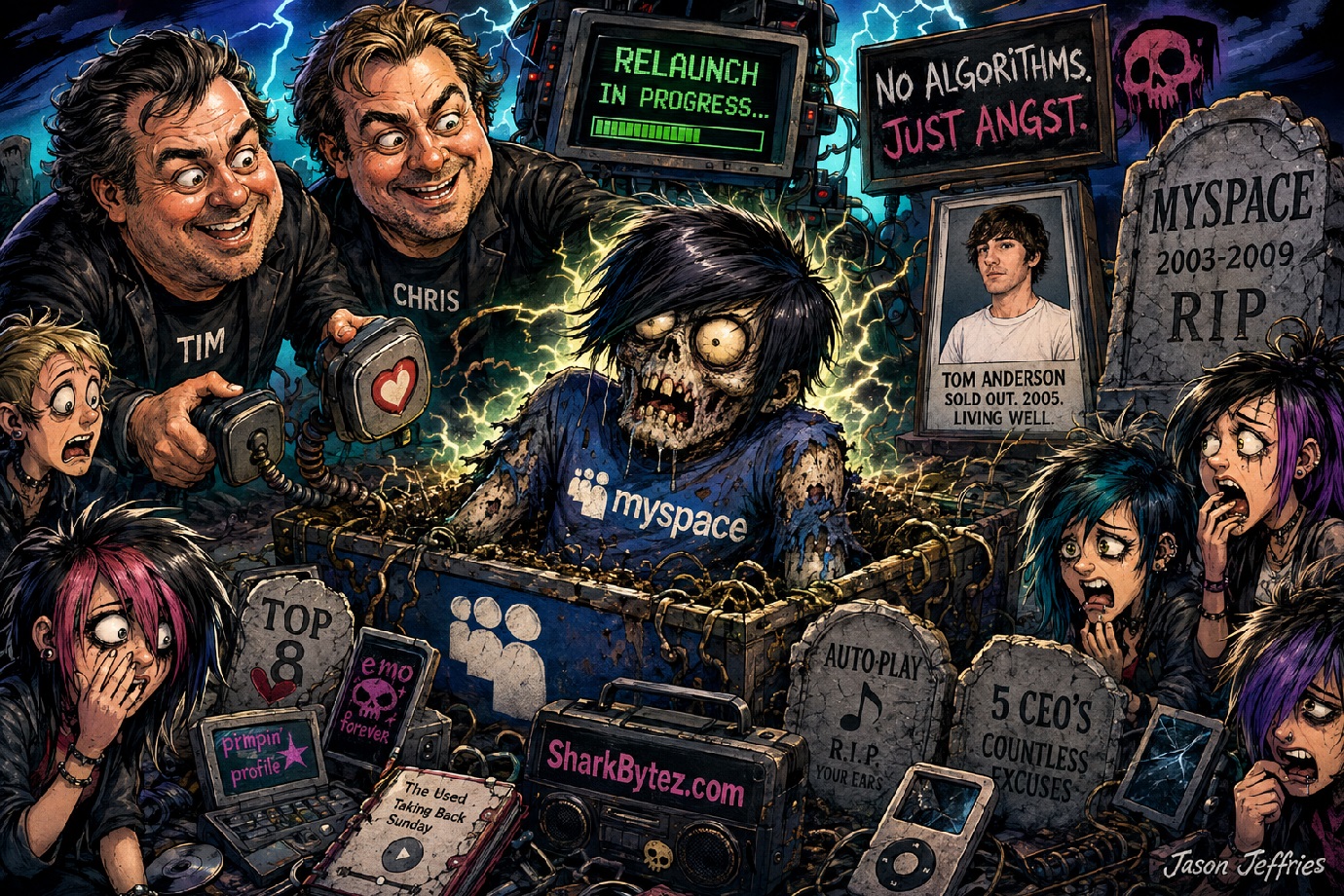
Tim and Chris Vanderhook just confirmed they are relaunching Myspace. That Myspace. The late-2000s digital attic stacked with custom HTML nightmares, auto-playing emo tracks that ambushed every visitor, and the sacred Top 8 ranking system that could end a friendship faster than a bad haircut.
Their pitch is almost elegant in its delusion. They will build something that “feels different,” a supposed rebellion against today’s dopamine-draining algorithms. In other words, they noticed the collective eye-roll at endless scrolling and decided the answer is to reanimate the 2005 corpse, slap some anti-algorithm slogans on it, and call it authenticity.
Picture the scene: a platform that once looked like every profile had been decorated by a sugar-high teenager with unlimited glitter fonts, now being wheeled out again after five different CEO regimes, a brutal 2009 thrashing by Facebook, and a user exodus that left it emptier than a closed mall at 3 a.m. The brothers already admitted in a new documentary that they previously built an entirely new Myspace, torched more than $150 million, and watched it fail. Their contingency plan? “If that one doesn’t work, we’ll do it again.” The kind of unhinged optimism usually reserved for lottery tickets and perpetual motion machines.
Tom Anderson remains the only adult in the story. The original automatic first friend in the white T-shirt sold out in 2005, pocketed the money, and has refused to go near the wreckage for over a decade. He walked away clean while everyone else keeps trying to restart the same dead engine.
This is peak corporate farce: a brand that has been effectively deceased for nearly twenty years, now wrapped in trendy anti-algorithm idealism and offered to a generation that left it behind before most of them could legally drive. Whether the zombie sits up or simply faceplants back into the dirt, the spectacle of executives trying to monetize 2000s nostalgia remains pure, high-grade digital comedy.