


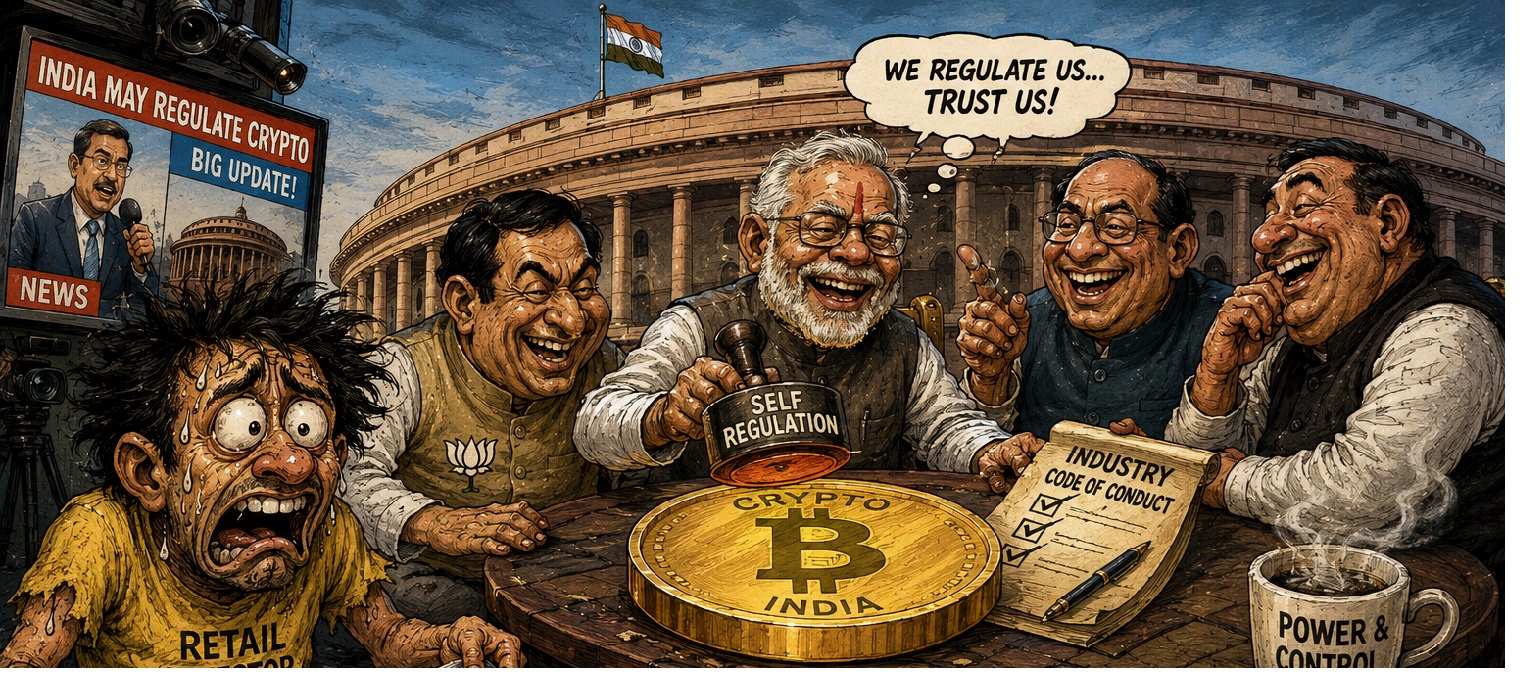
India Crypto Regulation Report: Babysitting the Web3 SandboxIn a twist that shocked absolutely no one who has ever wrestled with bureaucratic red tape, India’s Parliamentary Standing Committee on Finance has looked at the wild, chaotic jungle of crypto-assets and essentially said: "How about you guys babysit yourselves while we figure out what any of this actually is?" Instead of dropping a legislative hammer or trying to force Web3 into the tight, traditional confines of the Securities Markets Code of 2025, Parliament’s latest report gently tossed the live grenade right back to the industry. The proposed master plan relies heavily on establishing Self-Regulatory Organisations (SROs). This is a delightfully corporate term for letting the crypto kids in the sandbox write their own playground rules, provided they sit under the watchful eye of SEBI and RBI holding a very large yardstick.
The Indian Crypto Tax DoublethinkThe sheer architectural doublethink on display here deserves its own hall-of-fame plaque. According to the committee's official stance, digital assets remain completely "unregulated in India." Except, of course, when it comes to taxing retail gains into total oblivion, enforcing aggressive anti-money laundering rules, and demanding meticulous reporting requirements.
The message is beautifully clear: We do not officially recognize your internet funny money, but we definitely recognize the flat 30% crypto tax you owe us on it.To their credit, the regulators did realize that painting every single blockchain token with the same broad brush is financial lunacy. They have generously recommended constructing actual legal definitions for Virtual Digital Assets (VDAs), acknowledging that a highly speculative meme coin named after an internet dog probably shouldn't be regulated the exact same way as a tokenized government bond.Copying Homework from Global Crypto Regulations
After months of high-level huddles with the Reserve Bank of India, tax enforcement agencies, and local Web3 executives—plus a little light studying of how the UK, Singapore, the US, and the EU handle their digital frontiers—India decided a phased, adaptive approach beats waiting around for a single, perfect omnibus law.Will letting crypto exchanges draft their own operational rules under government supervision actually bring peace to the financial valley? Maybe.
But for an industry used to operating in a murky grey zone punctuated by sudden tax raids, getting told to self-regulate feels less like a strict crackdown and more like a conditional parole.