

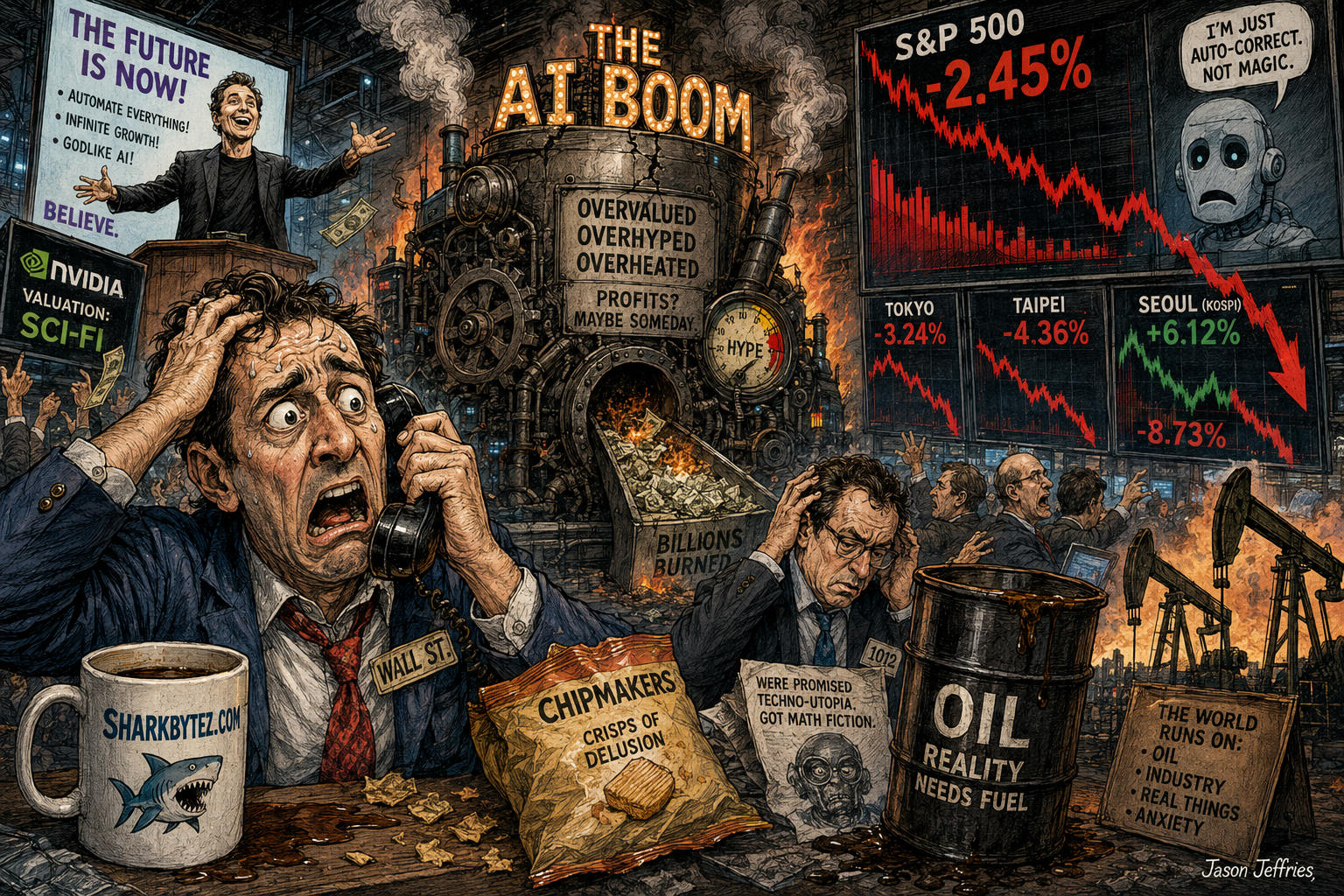
The market is a sweaty, frantic engine room, and right now, the gears are grinding to a halt. For months, Wall Street has been binging on artificial intelligence like a desperate gambler chasing a hot streak in a dark alley. We were promised techno-utopia—godlike productivity, automated fortunes, and computer processors that could practically conjure gold from thin air. Tech executives strutted across stages like cult leaders, selling the future by the shovel-load. Investors swallowed it whole, bidding up chipmakers until the valuations looked less like mathematics and more like bad science fiction.
Then came the morning after. Friday hit the trading floors like a brick to the jaw, dropping the S&P 500 into a tailspin and sending Tokyo and Taipei indices off a cliff. Why? Because the money men are suddenly staring at the bill, realizing they paid premium luxury prices for what might just be a very expensive, glorified auto-correct. A cold realization is bleeding through the exchanges: what if this AI boom doesn’t actually generate the profits to justify the worship? Meanwhile, as the digital gold rush hits a wall of reality, the old world comes knocking. Oil prices are climbing again, fueled by the relentless, grim geopolitical friction with Iran. It’s a brutal reminder of how things actually run. You can’t power a theoretical global superintelligence without a massive, very physical grid, and you can’t run that grid on vibes, PowerPoint presentations, and hope. Look at Seoul, where the Kospi index is swinging violently—up 6% one day, down nearly 9% the next.
This isn’t strategic investing; it’s a high-stakes crapshoot controlled by a couple of hardware conglomerates. The tech elite wanted us to believe they had conquered the old human cycles of panic and greed. Instead, we’re watching the exact same story play out: a mindless stampede toward the hype, followed by a blind, clawing scramble for the exits. The machine promised a glorious sprint into eternity. Instead, we’re stuck in the mud, watching tech giants burn billions to polish code while the real-world economy still operates on crude oil, heavy industry, and cold anxiety. Wall Street wanted the future delivered effortlessly on a silver platter, but the engine is smoking, the engineers are sweating, and the clients are starting to suspect they’ve been sold a beautifully packaged illusion.