

Why Gold’s 15,000% Rise Since 1971 Faces a 21% Pullback
Not financial advice. For satirical purposes only.
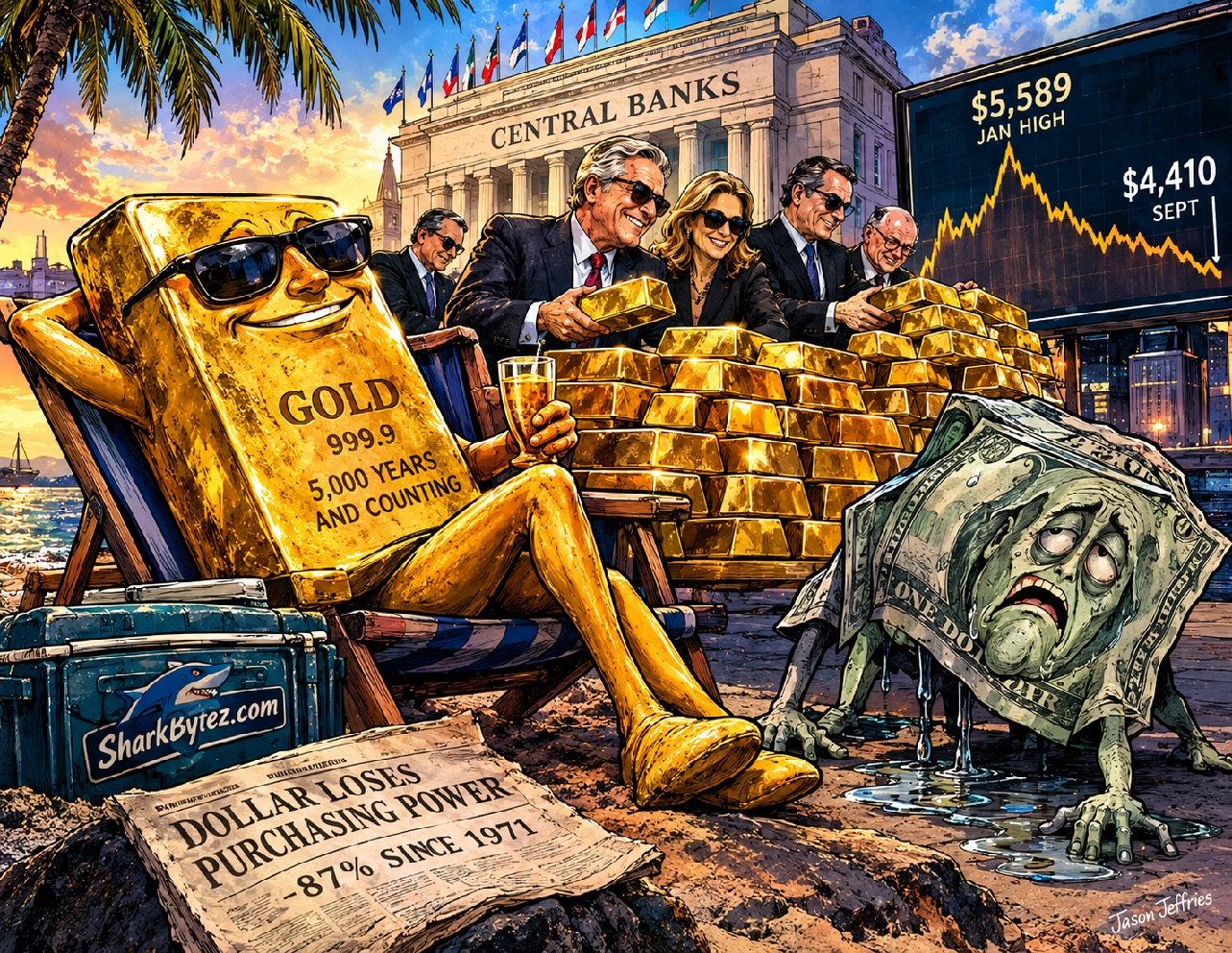
Gold punched a January high of $5,589 an ounce and then slid back to roughly $4,410 by September, the kind of performance that forces every serious voice in the room to clear its throat and redefine what “store of value” is supposed to mean. The latest pitch arrives with practiced confidence: since Nixon slammed the gold window shut in 1971 the dollar has lost about 87 percent of its purchasing power, while gold has climbed more than 15,000 percent. Central banks, those famously unsentimental institutions with no product to sell, quietly made gold the world’s single largest reserve asset class in 2026, overtaking Treasuries. Eighty-four percent of them say they hold it specifically as a long-term store of value. The metal pays nothing, sits inert in vaults, and can flatline for decades, yet the multi-decade math is presented as settled law.
Picture the slow-motion absurdity. On one side sits a shiny yellow rock that has been doing the same job for five thousand years: looking valuable while producing absolutely nothing. On the other side sits modern finance, still trying to look sophisticated while its own currencies quietly leak purchasing power like a slow, polite puncture. The central bankers, who have every incentive to be cautious and zero incentive to flatter a marketing narrative, are stacking bars at roughly a thousand tonnes a year and calling it prudence. The sales charts begin in 1971, race past the boring decades, and land triumphantly at the recent peak, carefully stepping over the fact that anyone who bought the 1980 high of $850 waited a full twenty-eight years just to break even in nominal terms.
The visual comedy almost writes itself. A metal that cannot be printed is held up as the adult in the room while the adults in the room keep printing. An asset that can lose purchasing power for two full decades is sold as the reliable way to preserve purchasing power. The same voices that warn against short-term thinking then celebrate every new high as confirmation and treat every pullback as a temporary misunderstanding. When the price drops twenty-one percent from the January peak, the charts simply stretch the time axis until the line points comfortingly upward again.
Both camps get to feel correct without ever having to shake hands in the middle. The gold side gets centuries of cultural weight and a fresh pile of central-bank buying. The currency side gets to keep paying interest and funding governments while insisting the metal is a barbarous relic that somehow keeps attracting the most risk-averse money on the planet. The rest of us get another round of earnest explanations about multi-decade cycles, entry-point risk, and the difference between a price correction and a broken thesis.
It is the kind of argument that only looks settled after the charts have been carefully framed. Gold does what it has always done: sit there, shine, and wait for the next wave of humans to decide it is the answer. The humans, as usual, supply the comedy.
Shark Cage - A SharkBytez Trusted Partner
Looking to buy physical gold or silver? Money Metals Exchange is who we trust for low premiums and fast shipping.